
Two of the more important metrics I’ve wanted to quantify for display glasses are the power draw of these headsets, as well as the actual display emission spectra which tells us quite a bit about the overall color performance and content reproducibility of the displays – below is a (not so brief) intro to how exactly we do that for the three headsets already torn down:
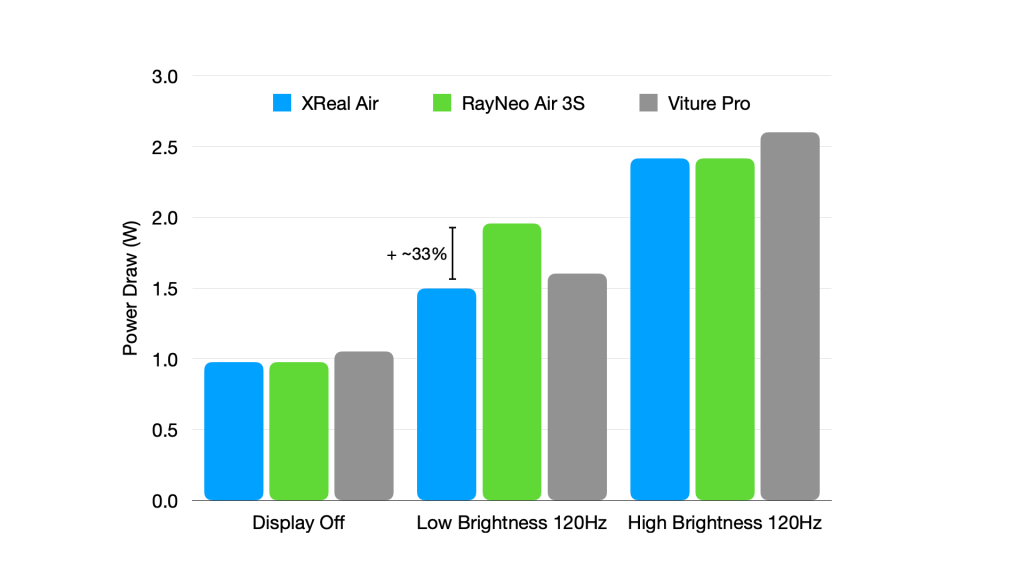
Not to belabor the point, but it was pretty interesting to see that the headsets themselves all have pretty similar power draws when off / at low brightness / at high brightness. The only exception seems to be RayNeo’s low brightness panel setting, which does draw a considerable amount more than the two Sony panels in the Xreal and Viture headsets – about 33% more.
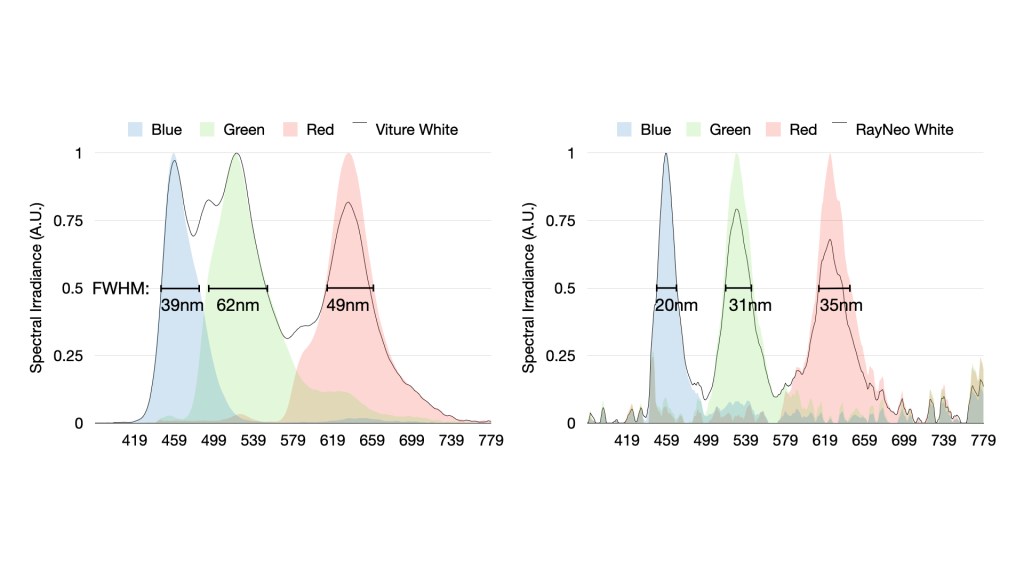
The other interesting thing is just how much purer the emission spectra of the RGB emitters in the RayNeo panel seem to be vs. the Sony panels in the Viture Pros and Xreals – B and G are almost half full-width half max (FWHM) and R is also quite a bit lower at 35nm vs. 49nm respectively. This is why RayNeo claims to cover almost 100% of the DCI-P3 color space and after seeing these differences, I’m quite convinced that display geeks (primarily the target audience of these headsets so far…) will gravitate towards headsets with these panels moving forward.


 Display Training Center
Leave a comment