
[Note: this is updated a month later than intended… you can thank Ron and Kasha at microLED Connect for the delay!]

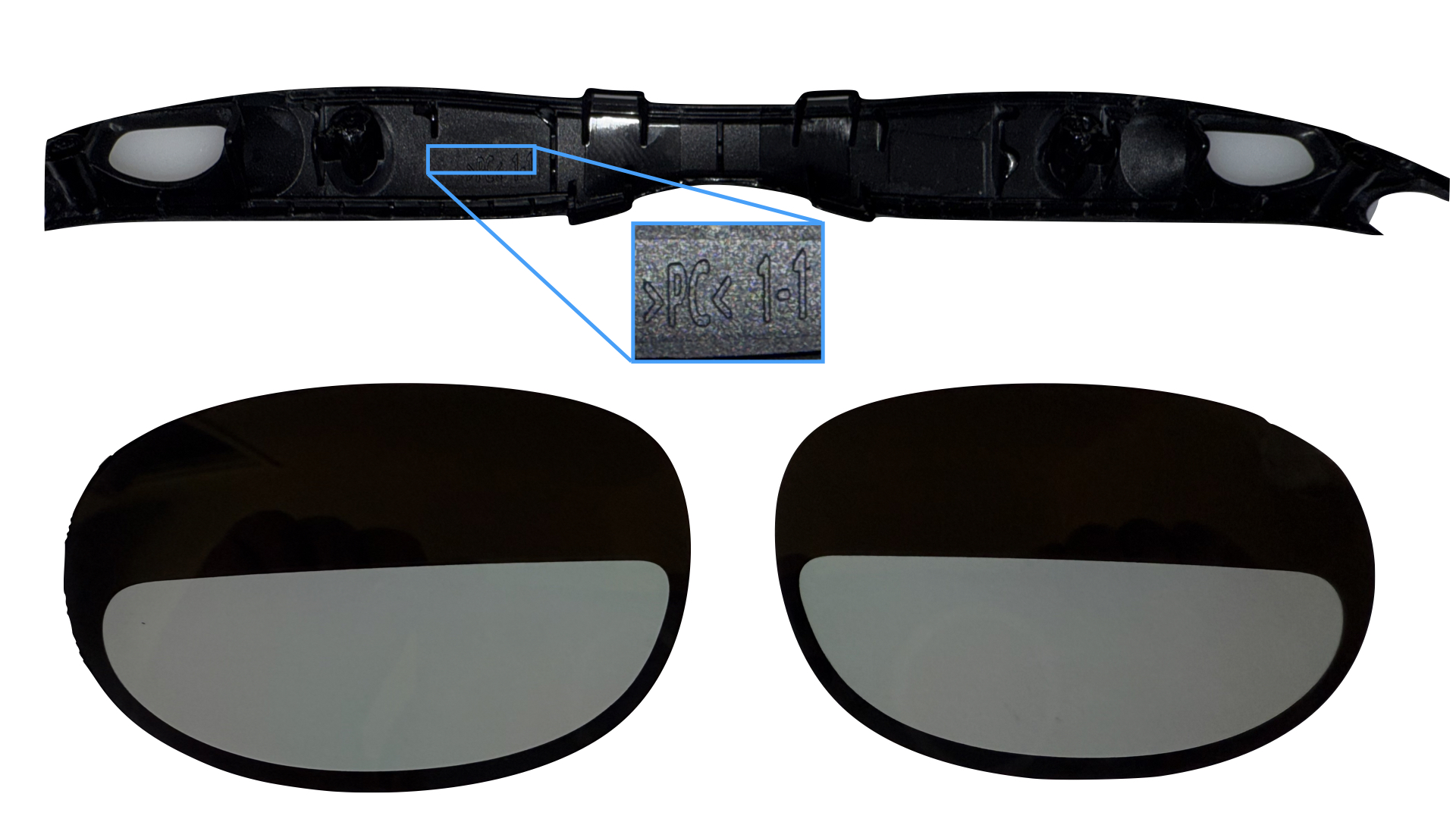
We’ll start this tear-down with the outer coverings around the nose bridge which houses the two static-tint front lenses. The lenses are likely polycarbonate, but we don’t have any clear material markings here to go off of. What we do know however is that the plastic coverings themselves are a single injection molded piece of Polycarbonate (PC) with some brass inserts for all the screws holding the pieces together. This PC is also what the plastic temples are made of, so we won’t touch on those materials too much…
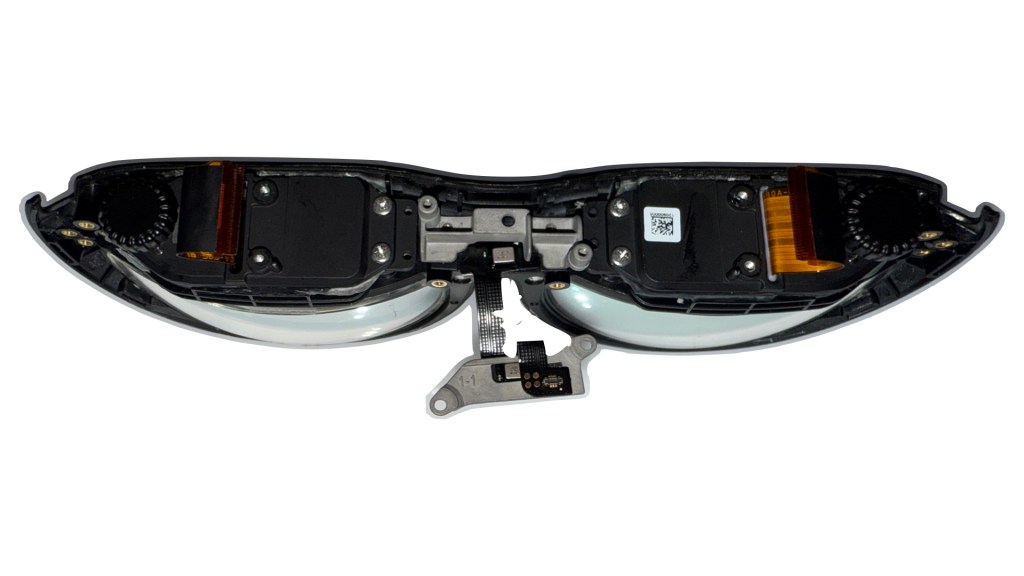
As we move on to the optical module and central frame, we can see how much Rokid was able to pack in to just the front of the glasses – we not only have the displays and lens modules, but our microphone, inertial measurement unit (IMU) and the central PCB which houses the display driver (DDIC), central processor, audio IC, voice processor, and much more… frankly I struggled to see any other relevant

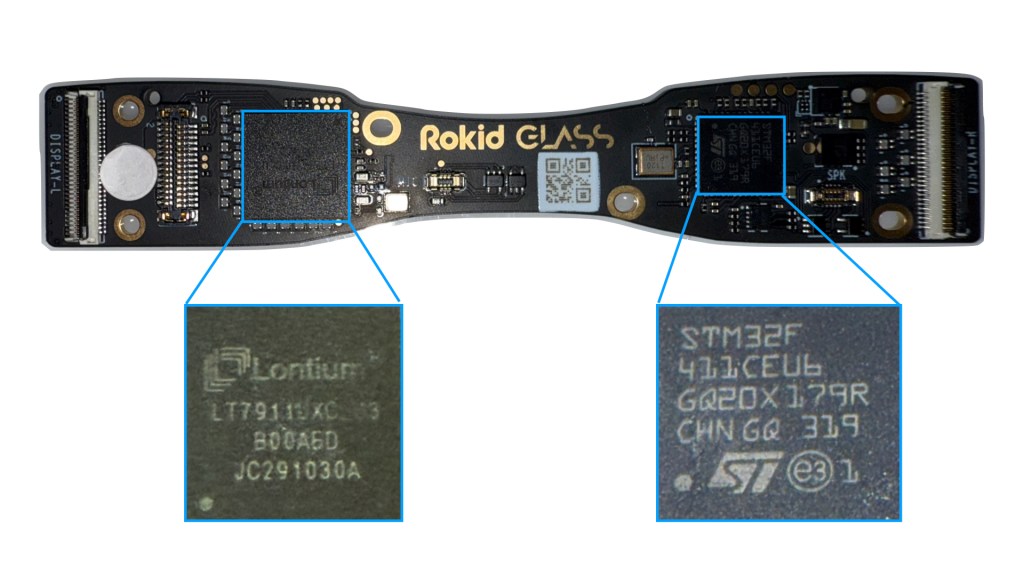
The PCB sports a sleek ‘Rokid Glass’ gold plating which was either (a) a very early name for the device before marketing said no or (b) a preview of things to come when their true AR ambitions were fulfilled. The top-side of our board, which houses the ZIF connectors for both OLED microdisplays, also has the 2 main ICs of interest – the DDIC from our seemingly favorite vendor Lontium (the same LT7911UXC we’ve seen in almost all glasses so far) and the microprocessor, which is an STMicroelectronics STM32F411CEU6. This CPU is a slightly higher performance version than what we previously saw in the Viture teardown, with a roughly 25% higher clock rate (100 MHz vs 80 MHz). There was no noticeable difference in performance with this ‘better’ processor since we are mostly letting the phone/console/laptop do most of the rendering and the headsets are only passing that information to the OLED microdisplays…
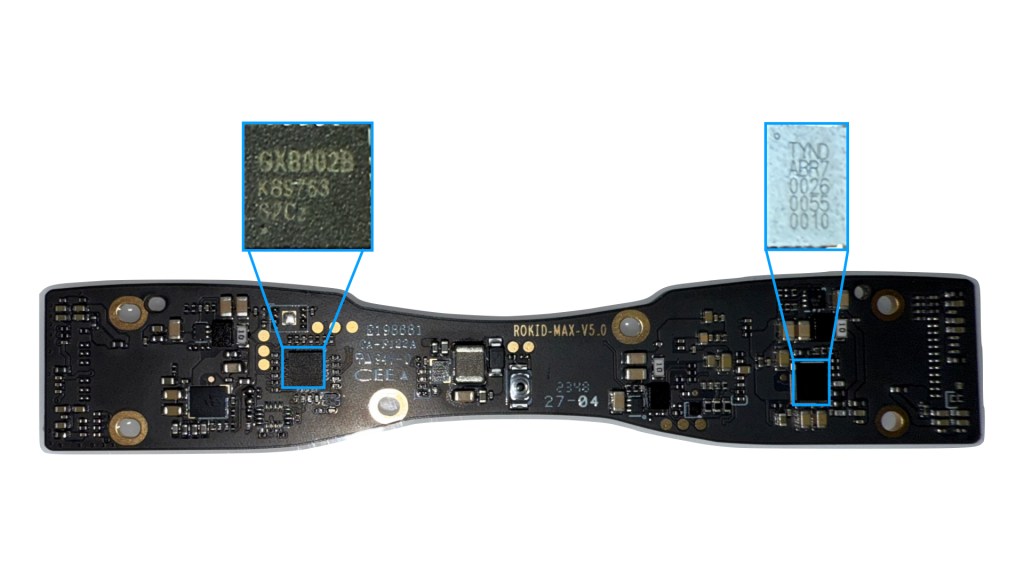
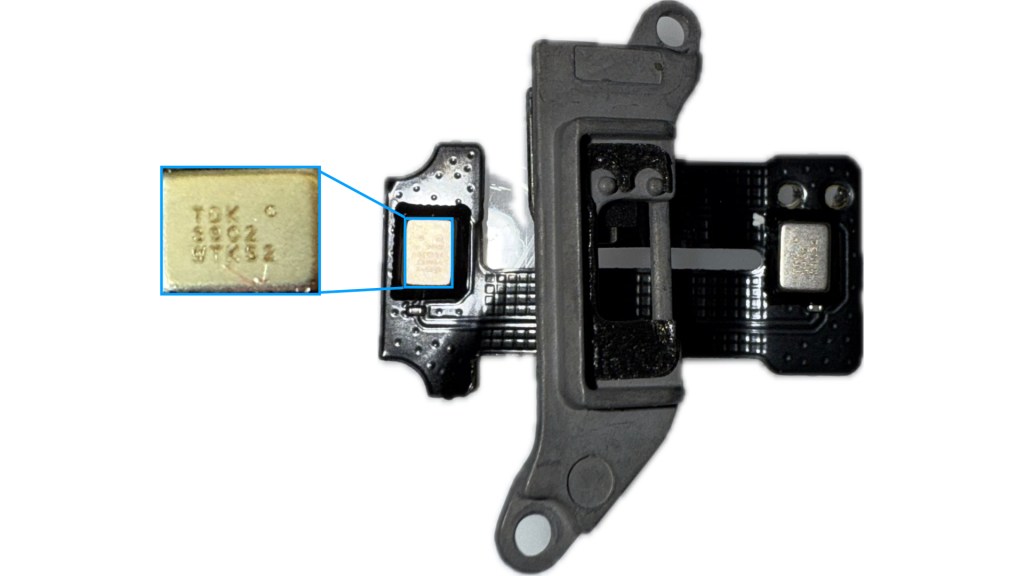
The bottom of this PCB houses yet still more driving ICs including the audio IC on the far right. One new chip that I haven’t seen before is the voice/microphone processor on the left in the image above – a National Chip GX8002. This is a new supplier to me, but I’m sure some readers may recognize them from other products in this series. To couple with this voice processor, Rokid also uses dual TDK 3902 microphones situated in the nosebridge – it’s interesting that there’s stereo microphony built into the unit, but as far as I could tell no real software to take advantage of it.
The final part of the teardown is the temples, and this is where it’s a particularly easy review of Rokid’s choices – these primarily serve to house the audio modules and the power delivery infrastructure (USB-C connector and power cable to main PCB). Our left temple is the power delivery side, with the USB-C PCB connecting both the left audio module and the power cable that reaches all the way to the frame.


On the right temple, it’s an even emptier volume with just the right audio module connecting into a small flex PCB that routes back to the main PCB to receive power for the components in this temple.

An interesting choice that Rokid made for these glasses was that the ToF module (right below) which is used to detect whether these glasses are currently being worn on the head or not is actually embedded into the right temple… a very unique choice where every other manufacturer places this module on the inside of the nosebridge, allowing them to also detect the temple distance to the optical module should they want some software correction for their rendering (spoilers: no one does this now). It’s not even that Rokid had no space for this component, as this could have easily been on the flex PCB used to house the dual microphones… so at this point I can only speculate it may have been a late design add?

Overall, Rokid had a great first set of display glasses on the market, and we can see where other brands were inspired for a few design choices like the diopter adjustment. The Rokid Max 2 AR Glasses didn’t do much to update the optical engine as far as I’m aware, so probably the next time we see a Rokid headset is once I receive their Rokid Glasses, a true AR (more like HUD) pair of glasses.

 Display Training Center
Leave a comment