
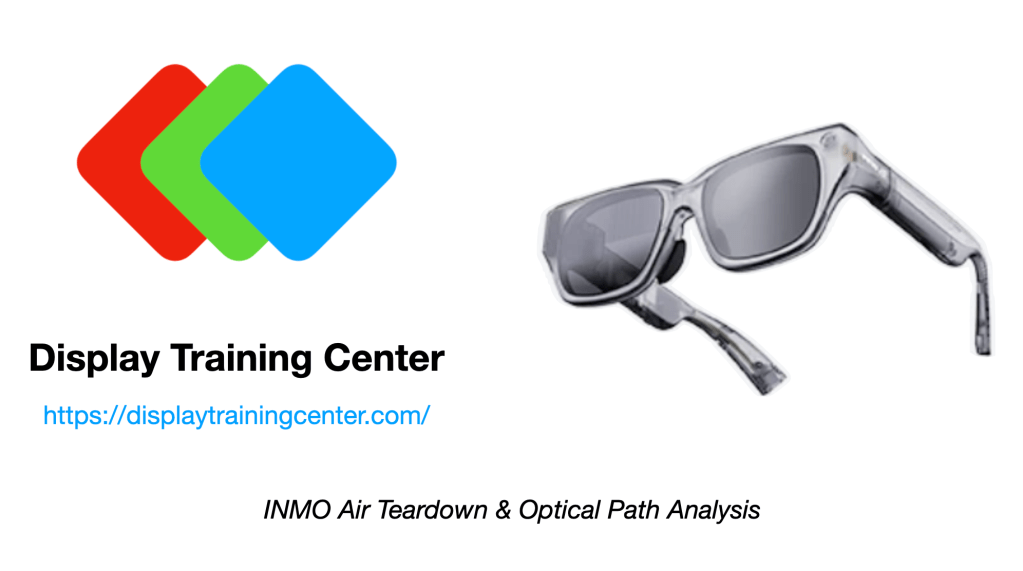
I don’t think INMO will give me an INMO Air 3 to tear apart and critique… so I had to get creative on how to look at their unique approach to AR glasses: microOLED + 1D reflective waveguide. So after finding a pair of the first generation INMO Air’s for sale online, it was time to tear them down and take a look at the vision for OLED in an AR headset, something no one else seems to have been brave enough to try yet.
The single biggest surprise of the entire experience was just how open the ecosystem seems to be – yes, there’s plenty of not-so-great 1st part apps that are loaded into the device, but the fact that I can Airplay directly to these glasses is an unexpected win (especially after the disaster that was the INMO app for using the Go glasses). This not only makes the testing so much easier, but actually makes me think that developers can also utilize these glasses for much more than delivering Facebook notifications directly to your eyeball.
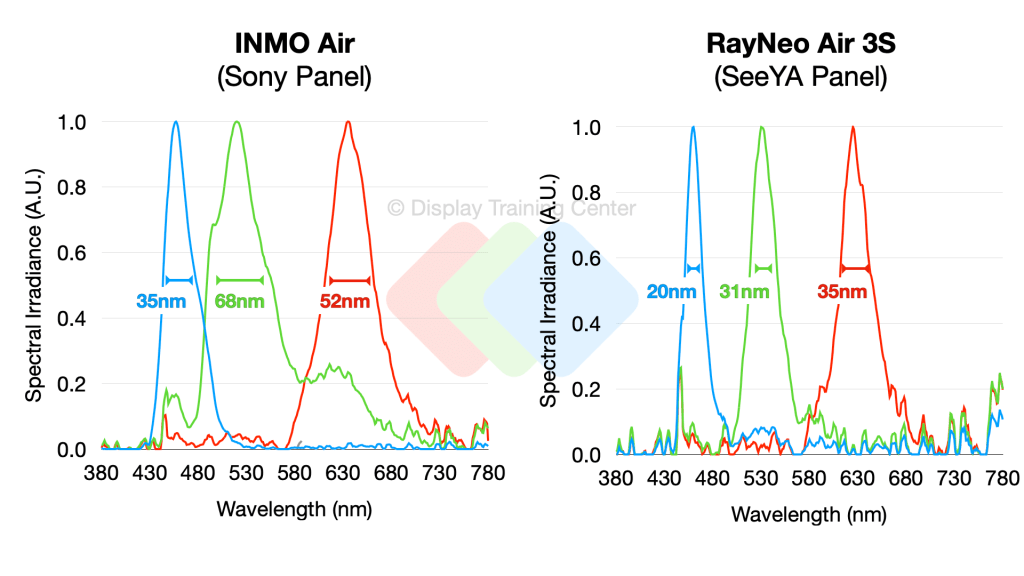
I hate to harp on the panel emission again, but it’s an intrinsic fact that these commercial Sony panels are just using an older emitter technology – you can see the characteristic wide-peaks in green and red are almost 2X the FWHM of the SeeYA panels that I’ve only found in the RayNeo devices. It’s possible that the INMO Air 3 will also use these panels since they claim a larger color volume, but we’ll have to verify that next time…
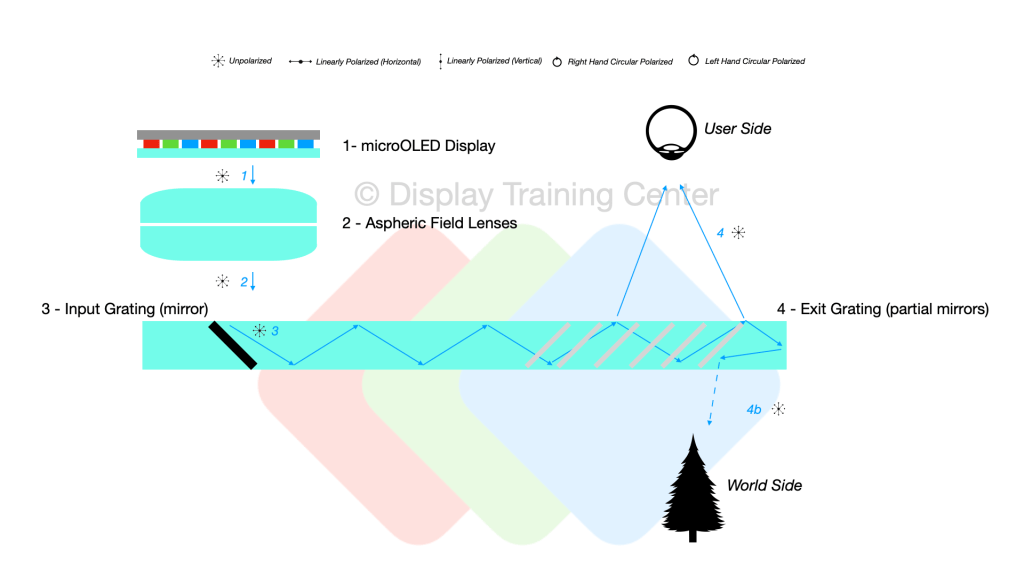
The optical path of the INMO Air is actually very simple – all we are doing is focusing the image from a microOLED panel into a reflective waveguide, which uses a series of partially reflective mirrors (4) to reflect the image back out to the user’s eye. This is a very simple design and very efficient when compared to the diffractive waveguides on the Go line, which is absolutely a requirement given we’re working with a 3000 nit max display panel vs. the 200k nit green microLED in the Go…

 Display Training Center
Leave a comment